
Plumbers have a name for the day after Thanksgiving. They call it Brown Friday, and it’s one of the busiest days of the year for drain calls. The garbage disposal usually gets the blame, but the real cause is almost always grease. A disposal chops food into smaller pieces. It does nothing at all about fat, and fat poured down a drain while it’s hot runs a few feet, cools against the pipe, and stays there. Do that every November and you’re building a clog one holiday at a time.
What Actually Happens in the Pipe
Cooking fat is liquid in a hot pan and solid at room temperature. Pour it down the sink and it doesn’t leave the house. It sets up on the inside of the drain line under the floor, and then it catches coffee grounds, rice and anything stringy that comes along after it. Over time you get a hard collar of grease that keeps narrowing the pipe.
Most of the year you’d never know it was there. Then the kitchen handles four times its usual load in one day, and the clog finishes forming while twelve people wait for dinner.
A roasting pan holds a surprising amount of fat. Pour it down the drain and you’ve added more grease in thirty seconds than that sink normally sees in a month.
What Not to Put Down the Disposal
The obvious one is grease, and that includes bacon fat, pan drippings and the gravy nobody finished. Let it cool in the pan and scrape it into the trash, or pour it into an old can and throw that out.
After grease, potato peels cause the most Thanksgiving clogs. Starch turns into a paste that coats the pipe and sets almost like wallpaper glue. Here’s the rest of the list:
- Celery, onion skins, corn husks and other stringy vegetable scraps, which wrap around the disposal’s parts instead of getting chopped up.
- Rice and pasta, which keep soaking up water after they go down and swell up in the trap.
- Turkey bones. A disposal isn’t built to grind bones, whatever the box says.
- Coffee grounds. A few are fine. A lot of them settle in low spots in the line and bind together with any grease that’s already there.
- Eggshells. The thin inner skin wraps around the grinding ring, and the bits of shell end up mixed into the grease like gravel in concrete.
What a disposal is good for is small amounts of soft food rinsed off plates, with plenty of cold water running. Cold, not hot, because cold water keeps any fat solid so it passes through as small bits instead of coating the pipe. Keep the water going for fifteen or twenty seconds after you switch the motor off so everything clears the trap.
Houseguests and the Bathroom
The kitchen isn’t the only drain under extra pressure. A full house means a lot more toilet paper going through the line, and guests who don’t know which toilet runs slow. The worst offender is wipes. Plenty of them say flushable on the package, but they don’t break down the way toilet paper does, and they snag on anything rough in the line, like a root or a crusty joint in an old cast iron pipe. Put a small trash can in each bathroom and the problem mostly goes away.
Why a Wet November Makes It Worse Here
This part is specific to this area. Grease narrows your line from the inside, and groundwater uses up what’s left.
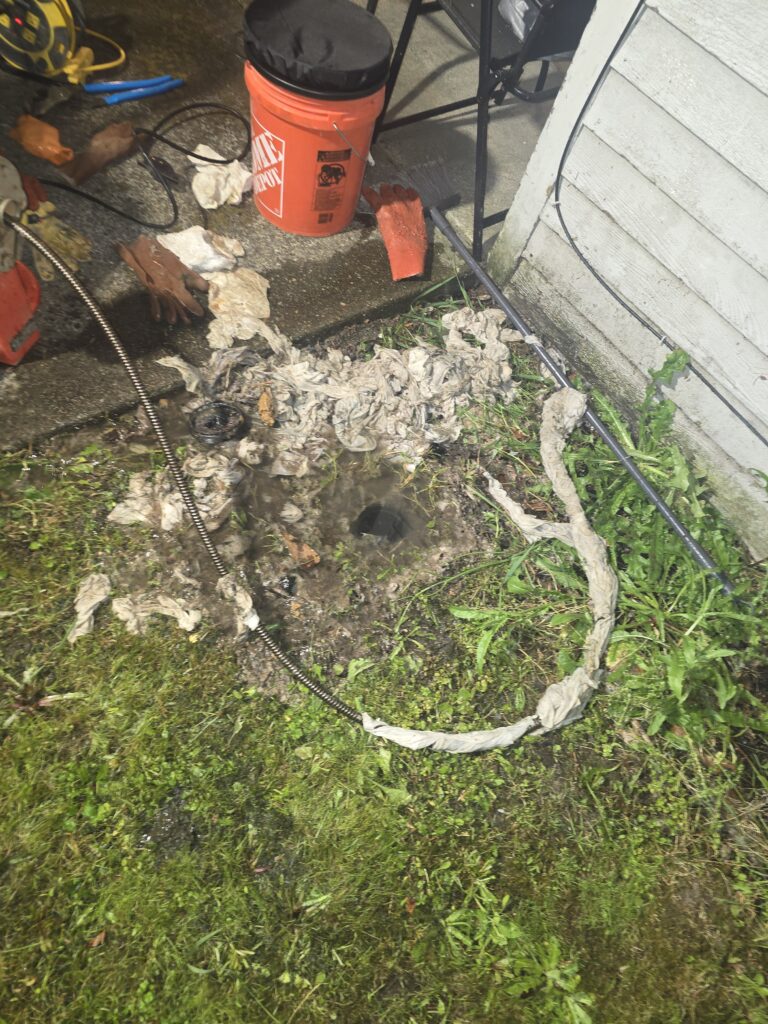
A lot of side sewers in King County are clay, laid in sections with joints that were never fully watertight. During a long stretch of rain, groundwater seeps in through those joints all along the line, so the pipe is already carrying water it was never meant to carry before anyone has washed a single dish. A line with a grease collar and a few roots in it does fine in August. Add a soaked November and a holiday kitchen and it can’t keep up.
That’s why the Thanksgiving backup often isn’t a kitchen problem at all. The kitchen just pushed it over the edge. If the blockage is in the main line, you’ll see it in more than one place, like the shower filling up when the washing machine drains, or the downstairs toilet rising when someone empties the kitchen sink.
If You’re on a Septic System
Some homes in rural King and Pierce County aren’t on city sewer at all. If yours drains to a septic tank, a big holiday puts real strain on it. Grease floats to the top of the tank and thickens the scum layer, and food scraps from the disposal add solids that sit in the tank until the next pumping. A house full of guests also sends a lot more water through in a short time, which can push solids out into the drain field before they’ve had a chance to settle.
Spread the laundry out over the week instead of running it all on Friday, and go easy on the disposal. If the tank is due for pumping anyway, having it done in the fall means it goes into the holidays with room to spare.
Things That Make It Worse
Running hot water after the grease is the most common bit of advice, and it backfires. Hot water pushes the fat further down the line before it cools, so instead of a clog in the trap where it’s easy to reach, you get one in the main line where it isn’t.
Chemical drain cleaner is the next one. Caustic cleaners get hot and can soften the top layer of a grease clog, but they rarely clear a hardened one, and in the meantime they sit right on top of it. On old cast iron they eat at the pipe. And if the drain still won’t go afterward, whoever comes to clear it has to work in a pipe full of caustic liquid.
Ice cubes and lemon peels are harmless, and they make the disposal smell better. They don’t sharpen anything, because disposals don’t have blades. They’re blunt metal lugs that smash food against a grinding ring.
The Week Before
Keep a jar or an empty can by the stove and pour fat into it as you cook. Wipe greasy pans with a paper towel before they go in the sink. Put peels in the compost instead of the disposal. And if the kitchen sink has been draining slowly for a while, get it looked at before the holiday. A drain that’s slow on a normal day will block under holiday load.
If your line backed up last Thanksgiving, or the one before, that isn’t a coincidence. It’s a line with a problem that holiday volume brings out once a year, and it’ll keep happening until someone finds the cause.
If It Backs Up Anyway
Stop running water right away. Adding more to a blocked line sends it back up through the lowest drain in the house. If more than one fixture is affected, it’s the main line and a plunger won’t help.
We clear kitchen lines and main sewer blockages across King and Pierce County. For grease and roots, hydro jetting scours the pipe wall clean instead of punching a hole through the middle of the clog, so a jetted line stays clear a lot longer than one that’s been snaked. We can also run a camera afterward to show you whether the grease was the cause or just the last straw.
Or request a callback. More on hydro jetting and sewer cleaning.
Questions We Get About Kitchen Drains and Disposals
Can I pour bacon grease down the drain if I run hot water after it?
No. Hot water keeps the grease liquid just long enough to carry it further down the line, where it cools and sticks to the pipe out of reach. Let it cool in the pan, then scrape it into the trash or pour it into an old can and throw that away.
Are flushable wipes really safe to flush?
Not in our experience. They don’t break down the way toilet paper does, and they catch on roots, rough joints and old cast iron. A house full of guests using wipes is a common cause of holiday backups. A small trash can in each bathroom solves most of it.
Why is my garbage disposal humming but not turning?
Something is jammed in it, or the motor has overheated. Switch it off at the wall first. Most disposals have a hex socket in the center of the underside that takes an Allen wrench, and working it back and forth frees a jam. Many also have a small red reset button on the bottom. Never put your hand down the drain.
Do enzyme drain cleaners work on grease?
They can help keep a line clean if you use them regularly, since the bacteria and enzymes slowly break down organic buildup. They won’t clear a drain that’s already blocked, and they work slowly. As upkeep after a professional cleaning they’re fine. As a fix for a backup on the morning of Thanksgiving, they’re no help.
How do I know if the clog is in the main line or just the kitchen?
If only the kitchen sink is slow, it’s probably the kitchen drain. If other fixtures act up at the same time, like the shower backing up when the dishwasher drains, or a toilet gurgling when the sink empties, the blockage is in the main line, and a plunger won’t fix it.
Is it OK to run the dishwasher if the sink is draining slowly?
Better not to. Most dishwashers drain through the same line as the kitchen sink, so a slow sink means the dishwasher’s water has nowhere to go either, and it’ll often come back up into the sink. Get the drain cleared first.