
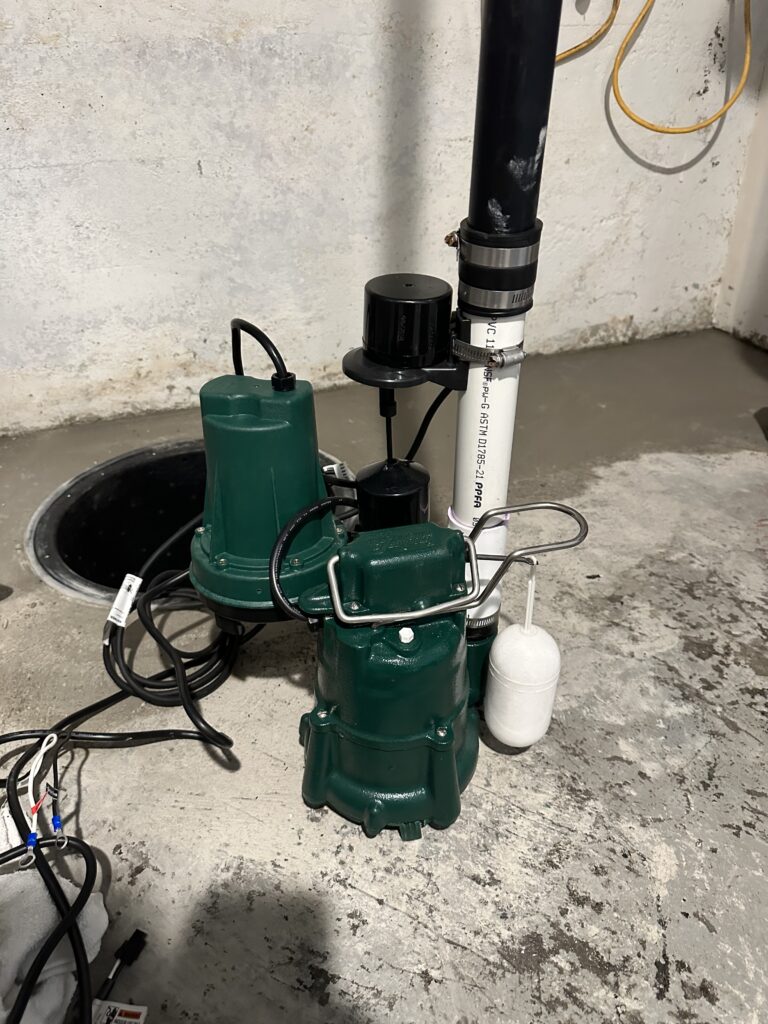
A sump pump runs on electricity, and Puget Sound windstorms knock the electricity out. The trouble is that both tend to happen at once. The storm pushing groundwater up under your house is usually the same storm dropping trees across power lines. A sump pump without some kind of backup protects you in every kind of weather except the kind you bought it for.
This Isn’t Hypothetical Around Here
In November 2024, a bomb cyclone cut power to about 114,000 Seattle City Light customers at its peak. That was the utility’s biggest outage since the Hanukkah Eve storm in 2006. Puget Sound Energy reported around 166,500 customers out across its service area and warned that full restoration would take several days. The storm brought heavy rain along with the wind, as they usually do.
If your house depended on one plug-in pump, that meant days with no protection at all while the rain kept coming. The pump itself was fine. It just had nothing to run on.
Battery Backup
A battery backup system is a second pump that sits in the same pit, mounted a little above the main one. It runs off a deep-cycle battery that stays topped up on a charger. If the power goes out, or the main pump can’t keep up with the water coming in, the backup takes over on its own.
The appeal is that it works on any property, regardless of where your water comes from. Better systems include an alarm and a control panel that shows the battery’s condition. How long it runs depends on the size of the battery and how fast the pit is filling. A properly sized system will usually handle a day or more of the pump switching on and off.
The weak point is the battery. Batteries lose capacity as they age, whether or not they ever get used, and one that has sat on a charger for six years won’t deliver anything close to what the box promised. These systems need the battery tested every year and replaced every three to five years. That’s exactly the maintenance people forget, and a backup nobody has checked since it went in is mostly giving you false confidence.
Water-Powered Backup
A water-powered backup uses the pressure from your city water supply to suck water out of the pit. There’s no battery and it doesn’t need electricity at all.
Nothing needs charging and nothing wears down sitting on a shelf. It keeps running as long as your water pressure holds, and during a windstorm it usually does, because water systems don’t rely on overhead power lines the way the grid does. For a long outage lasting several days, it’s often the more dependable of the two.
It does have real limits. It needs city water at decent pressure, so it’s no use on a private well, and that rules it out for a lot of rural properties in King and Pierce County. It uses clean water to move groundwater, roughly a gallon in for every couple of gallons pumped out, and you’ll see that on the water bill after a big storm. It also needs a backflow preventer, and not every city allows these systems, so the local code question has to be answered before anyone quotes you one.
What About a Generator?
A portable generator can run a sump pump during an outage, and if you already own one it’s a reasonable plan, as long as somebody is home to start it. Plug the pump straight into the generator with a heavy extension cord rated for outdoor use, and keep the generator outside, well away from doors and windows. Never connect a generator to the house wiring without a proper transfer switch, because it can send power back down the line and hurt a utility crew working on it.
The real limitation is that a generator only works if you’re there. Storms don’t wait for you to get home from work, and a battery or water-powered backup kicks in automatically.
Make Sure the Backup Can Keep Up
Backup pumps are usually smaller than the main pump, and many of them move a lot less water. That’s fine during an outage on a moderate day. It’s a problem when the backup is the only thing running during the heaviest rain of the year. A pump that can’t keep pace with the water coming in doesn’t stop the pit from overflowing. It only slows it down.
Pump capacity is listed in gallons per hour, and that number drops as the pump has to lift water higher. Look up the rating at your actual lift height rather than the big number printed on the box. If your main pump runs hard in a big storm, the backup needs to be reasonably close to it in capacity.
Combination Systems
Some manufacturers sell the main pump and a battery backup as one package, with a single controller running both. It’s tidier and easier to keep track of, because one panel tells you how both pumps and the battery are doing. If you’re replacing an aging main pump anyway, a combination system is a good option to look at.
Which One Makes Sense for You
If you’re on city water with decent pressure, and your city allows it, a water-powered backup is the sturdier choice for the kind of outage we get here: long, wind-driven ones that leave the water system running.
If you’re on a well, if your pressure is borderline, or if local code doesn’t allow water-powered units, go with a battery system. What makes it work is a reminder on your calendar every fall to test the battery.
Some houses justify having both. A finished space below grade on a high water table, which describes a fair number of homes in the Green River valley, isn’t a place where you want to depend on a single backup.
Get an Alarm, Whatever Else You Do
A high-water alarm is the cheapest thing on this page and maybe the most useful. It’s a float switch and a buzzer mounted above the level where your pump should switch on, and it goes off if the water in the pit rises higher than it ought to. They’re inexpensive and quick to put in, and they turn a flooded crawl space you discover in February into a problem you hear about within minutes.
Wi-Fi models that send a text to your phone cost a bit more and are worth it if the house ever sits empty for more than a day, like over the holidays.
Check the Discharge Line Too
Backup power doesn’t help if the water has nowhere to go. December cold snaps can freeze a sump discharge line solid, especially where the outlet sits in a shady spot or empties onto flat ground where water pools around the end of the pipe. The pump runs, ice blocks the line, and the water ends up back in the pit.
Make sure the outlet is clear, that it slopes so it drains completely, that it isn’t buried under leaves or bark, and that it sends the water well away from the foundation instead of dumping it where it’ll soak right back in. If yours has iced up before, a freeze-relief fitting near the house end gives the water somewhere to escape when the outlet is blocked.
A Fall Routine That Takes Ten Minutes
Pick a dry weekend in October. Pour a bucket of water into the pit and watch the main pump cycle. Unplug the main pump and pour again to make sure the backup takes over. If it’s a battery unit, check the battery date and use the test button on the control panel. Lift the alarm’s float to make sure it sounds. Then walk outside and check the end of the discharge line. That’s all of it, and it’s the ten minutes most people skip.
We look at sump pump setups across King and Pierce County and tell you which kind of backup fits your house. If your pump is already near the end of its life, it usually makes more sense to replace it at the same time than to add a backup to a pump that’s on its way out.
Pump down right now? Call 206-579-1757. More on sump pump repair and installation.
Questions We Get About Sump Pump Backups
How long will a battery backup sump pump run?
It depends on the battery size and how often the pump has to switch on. A properly sized system with a healthy battery typically covers a day or more of normal cycling during an outage. In a heavy storm with the pit filling fast, expect less. An old battery delivers a lot less than the rating on the box.
How often should I replace a sump pump backup battery?
Every three to five years for most deep-cycle batteries, even if the backup has never been used. Test it every fall using the button on the control panel, and replace it sooner if the test fails or the battery is visibly swollen or leaking.
Does a water-powered sump pump work on well water?
No. It needs steady city water pressure to work, and a well pump stops when the power goes out, which is exactly when you’d need the backup. If you’re on a well, a battery backup or a generator is the way to go.
Will a water-powered backup raise my water bill?
Only while it’s running. It uses roughly a gallon of city water for every couple of gallons it pumps out of the pit, so a long storm shows up on the bill. Since it only runs when the power is out or the main pump can’t keep up, most months it uses nothing.
Can I run my sump pump off a generator?
Yes. Plug it straight into a portable generator with a heavy outdoor-rated extension cord, and keep the generator outside, away from doors and windows. Never connect a generator to the house wiring without a transfer switch. The weakness is that somebody has to be home to start it.
Do I need a backup if my sump pump is new?
A new pump doesn’t help when the power is out, and around here, outages and heavy rain tend to come together. If the pump protects a finished space or anything you’d hate to lose, a backup is worth having no matter how old the main pump is. At the very least, add a high-water alarm.