
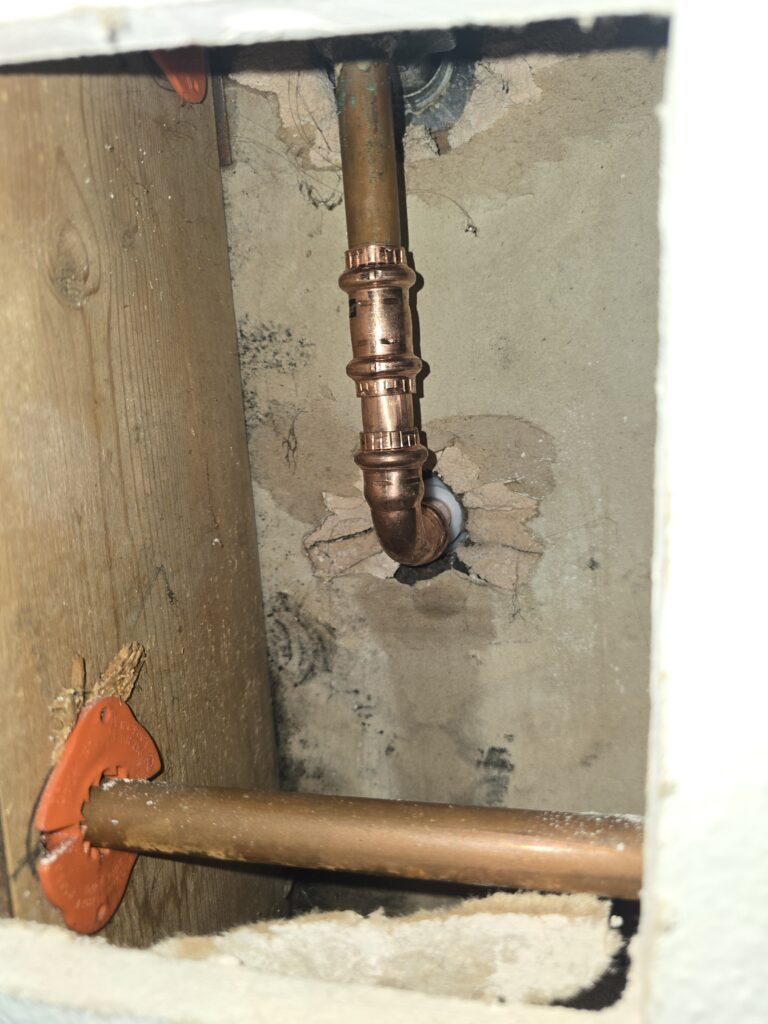
Disconnect every garden hose before the first freeze. It takes five minutes and it prevents more burst pipes around here than anything else you can do. A hose left attached holds water in the faucet, and when that water freezes it expands back into the pipe inside your wall. That’s where the split happens, not at the spigot you can see. Most people don’t find out until spring, when they turn the hose on and water starts running into the crawl space instead of the garden.
Why Northwest Houses Break in Weather the Midwest Barely Notices
Western Washington builds for damp. Our winters sit around 40 degrees for months, which is gloomy but harmless to plumbing, and then we get two or three sharp freezes a year. Houses get designed around the average, and the freezes catch them out.
You can see it in where the pipes run. Plumbing here goes through vented crawl spaces, unheated garages and exterior walls with not much insulation in them, and outdoor faucets often have no frost protection at all. A house in Minneapolis keeps its pipes deep inside heated space because the code demands it. A 1960s house in Kent might have a water line running through a vented crawl space with cold air blowing across it all night.
So a two-day cold snap that somebody in the Midwest wouldn’t comment on can do real damage here. Our freezes aren’t especially severe. The houses just aren’t set up for them.
The October Checklist
- Disconnect and drain every hose. Coil them up somewhere out of the weather. A hose full of ice splits too.
- Open each outdoor faucet for a moment once the hose is off, so any water left in the spout runs out, then close it again.
- Look for an indoor shutoff for each outdoor faucet. A lot of homes have one in the crawl space, garage or basement. Close it, then go outside and open the faucet to drain the stretch of pipe between the two valves. Leave the outdoor faucet open for the winter so anything left in there has room to expand.
- Put an insulated cover on every outdoor faucet. The foam domes at the hardware store cost a few dollars each and work well.
- Shut off and drain the irrigation system. Sprinkler lines hold water close to the surface, and the backflow assembly is usually the most expensive part to replace if it freezes. Many water utilities around here require that assembly to be tested every year anyway, so fall is a good time to get both done.
- Go under the house with a flashlight. Any water line running through an unheated crawl space should have foam pipe insulation on it. If one section always seems to give trouble, heat cable made for pipes is an option, as long as it’s installed exactly the way the instructions say.
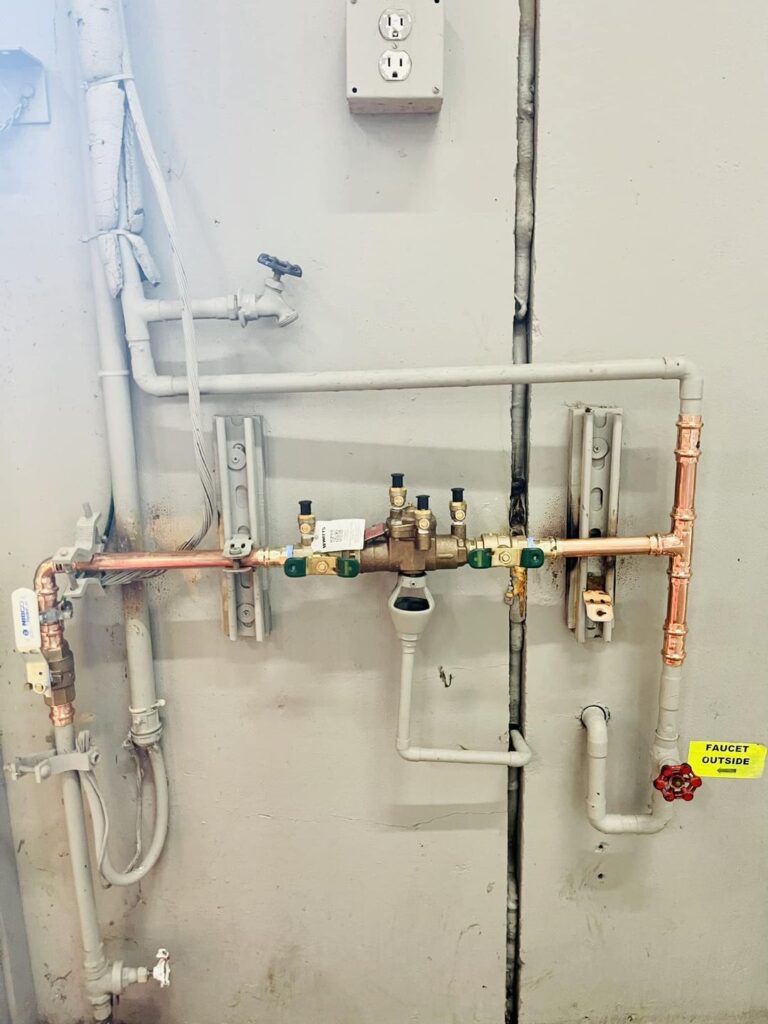
One more thing for the crawl space. Before a hard freeze, close the foundation vents nearest to any exposed pipes, and open them again once the cold snap is over. A vented crawl space that’s sealed up all winter will trap moisture, and that causes its own problems.
Frost-Free Faucets Can Still Freeze
If your outdoor faucet has a long body, with the actual valve sitting ten or twelve inches back inside the wall, it’s a frost-free sillcock. They’re a lot better than the old short spigots, and they’re what we’d put in if you’re replacing one.
They still fail in one specific way, and that’s with a hose attached. The design depends on water draining back out through the spout once you shut the valve off. A connected hose blocks that, water stays sitting in the barrel, and it freezes inside the wall just like it would in a regular faucet. People with frost-free faucets often figure the hose rule doesn’t apply to them. It’s actually the whole reason the design works.
They also need a slight downward slope toward the outside to drain properly. If yours was installed perfectly level, or tips back toward the house, it’ll hold water whatever you do.
Pipes in the Garage
Garages catch people out. They feel like part of the house, but most aren’t heated, and plenty have little or no insulation in the outside walls. If a water line runs along a garage wall, or your water heater lives out there, those pipes are a lot closer to the outdoor temperature than you’d guess.
Wrap any exposed lines in foam pipe insulation, especially along outside walls, and keep the big door shut during a cold snap. If there’s a washer or a utility sink in the garage, check those supply lines too. They often run through the same uninsulated wall.
Manufactured Homes Need Extra Attention
There are a lot of manufactured homes in South King County, and they’re more exposed to freezing than a site-built house. The water lines usually run under the floor inside the skirting, and the main supply comes up out of the ground through a riser that sits right out in the cold.
Walk all the way around and check that the skirting is intact, with no gaps or missing panels letting wind get underneath. The riser needs insulation and, in most cases, heat tape that’s plugged in and working. Check the indicator light if it has one, or make sure it’s warm to the touch after it’s been plugged in a while. Old heat tape is a fire risk, so replace any that’s cracked or has seen a lot of winters. Do all of this in October. After the first freeze it means lying on your back in frozen mud.
When a Hard Freeze Is in the Forecast
Let a cold-water tap on an outside wall run at a slow trickle overnight. Moving water is much harder to freeze, and keeping a tap open relieves the pressure buildup that actually splits pipes. The water it uses is small change next to a burst pipe.
Open the cabinet doors under any sink on an exterior wall so heat from the house can reach the pipes. Keep the garage door shut if water lines run through the garage. And if you’re heading out of town, don’t turn the heat off. Set the thermostat no lower than 55.
If a Pipe Has Already Frozen
If you open a tap during a freeze and nothing comes out, or just a dribble, the line is frozen somewhere. Shut off the water to the house before you do anything else. A frozen pipe may already be split, and you won’t know until it thaws and starts spraying. Even a small split lets out a lot of water. A crack an eighth of an inch wide is commonly said to release around 250 gallons a day, most of it into a wall or crawl space where you can’t see it.
Then warm the pipe gently. A hair dryer works, and so do towels soaked in hot water. Start at the faucet end and work back toward the frozen section so the meltwater has somewhere to go. Leave the faucet open while you work.
Never use a torch or any open flame on a pipe inside a wall or crawl space. Old framing and dry insulation catch fire easily, and house fires during cold snaps often start exactly this way. If you can’t reach the frozen section, or you can see a split, leave the water off and call us.
Know Where Your Main Shutoff Is
Everyone in the house should know this before they ever need it. The main shutoff is usually in the garage, in the crawl space near where the water line comes in, or in the meter box out by the street. The valve in the meter box often belongs to the water utility and may need a special key, so it’s better to know where the house-side valve is.
Find it on a dry afternoon. Make sure the handle actually turns, because a valve that hasn’t been touched in twenty years can be seized solid. Show everyone else in the house where it is. A shutoff nobody can find at two in the morning doesn’t help anybody.
What to Fix Before Winter
If you still have the old short spigots, especially ones that drip or need a hard twist to close, October is a good time to swap them for frost-free sillcocks with a built-in vacuum breaker. Same goes for any crawl space pipe that froze last year. Pipes that froze once usually freeze again in the same spot.
We replace outdoor faucets, insulate exposed crawl space lines and fix the damage when a freeze gets through, all across King and Pierce County.
Burst pipe right now? Call 206-579-1757. More on emergency plumbing and residential plumbing.
Questions We Get About Winterizing Outdoor Faucets
Do I need to winterize a frost-free outdoor faucet?
Yes, at least the hose part. Disconnect the hose every fall, because a hose left on keeps water trapped in the barrel and the faucet can split inside the wall. If the faucet was installed with a slight slope toward the outside, that’s usually all it needs. An insulated cover doesn’t hurt.
Should I leave my outdoor faucet open over the winter?
If you’ve closed an indoor shutoff for that faucet, yes. Leave the outside faucet open so any water left in the pipe can drain and has room to expand. If there’s no indoor shutoff, close the faucet, take the hose off and put an insulated cover on it.
At what temperature do pipes freeze?
Water freezes at 32 degrees, but pipes usually need a good few hours well below that before they freeze solid. A commonly quoted danger point is around 20 degrees outside. In a vented crawl space with wind blowing through, exposed pipes can freeze at milder temperatures than that, which is why they need insulation.
How do I know if a pipe burst inside my wall?
Often you don’t until it thaws. Signs include water spraying or dripping near the foundation when you turn on an outdoor faucet in spring, damp drywall inside next to the faucet, a hissing sound in a wall, or a water bill that jumps. With everything in the house turned off, a moving leak indicator on the water meter tells you water is going somewhere.
Is it worth dripping my faucets during a freeze?
During a hard freeze, yes. A slow trickle from a cold tap on an outside wall keeps water moving and relieves pressure in the pipe, and it uses very little water compared with what a burst pipe costs. You don’t need to do it every cold night, just when a real freeze is forecast.
Do I need to blow out my sprinkler system?
If the lines hold water near the surface, yes. Draining or blowing out the lines with compressed air keeps them from cracking, and the backflow assembly needs protecting too, since it’s usually the priciest part to replace. Many water utilities here require that assembly to be tested every year, so combine both jobs in the fall.