
Your sewer cleanout is a capped pipe that lets a plumber get into the line between your house and the street without pulling a toilet off the floor. On most homes in Kent and the towns around it, the cleanout is outside, within a few feet of the foundation, roughly below the main bathroom. Sometimes it’s in the crawl space or the garage instead. Finding it on a dry afternoon takes ten minutes. Finding it while a toilet is overflowing takes a lot longer, and you’re paying for every one of those minutes.
What You’re Looking For
A cleanout is a short length of pipe, usually three or four inches across, coming up out of the ground or out of a wall and closed off with a threaded cap. On houses built since the 1970s it’s usually black ABS or white PVC plastic. On older homes you’ll often find cast iron with a brass plug that has a square nub on top, made to be turned with a wrench rather than by hand.
Some stick up a few inches above the dirt. Others were cut off flush with the ground and covered with a small round lid, and those get mistaken for sprinkler valve boxes all the time. The water meter box is something else entirely. It’s usually out by the sidewalk or the street, it’s bigger, and there’s a meter inside. Leave that one alone.
If you find two caps side by side near the property line, that’s a two-way cleanout. One opening points back toward the house and the other points toward the street, so a cable can be run in either direction. You’ll see them on a lot of lines that were replaced in the last twenty years or so.
Where to Look First
Start by looking up at the roof. Find the biggest vent pipe sticking out of it, usually three or four inches across and roughly above the main bathroom. Your main drain runs down from there and leaves the house close to that spot. Walk outside to that wall and search within about six feet of the foundation.
Nothing there? Work through these:
- The crawl space, near where the big drain pipe passes through the foundation wall. A lot of older homes around here only have an inside cleanout, and it’s often right at that exit point.
- The garage, especially when a bathroom sits over it or right next to it. Look low on the wall that faces the street.
- Anywhere along the route from the house to the street. The line has to reach the main, so the edge of the lawn and the strip beside the driveway are both fair game.
- Under the landscaping. Bark mulch, ivy and twenty years of raised beds bury a lot of cleanouts. A long screwdriver or a metal probe pushed into soft ground will find a plastic cap faster than a shovel will.
If you’re inside Seattle city limits, the city keeps historical side sewer records, usually called sewer cards, that sketch where the line runs on your lot. Other cities keep their own records and some are more complete than others. Your public works office can tell you what they have on file for your address.
Once You Find It
Mark it. Set a paving stone next to it, push a short stake into the ground, or take a photo on your phone that shows it next to something that won’t move, like a downspout or a fence post. The first thing any plumber does on a main line call is hunt for the cleanout, so that one minute of effort comes straight off the bill later.
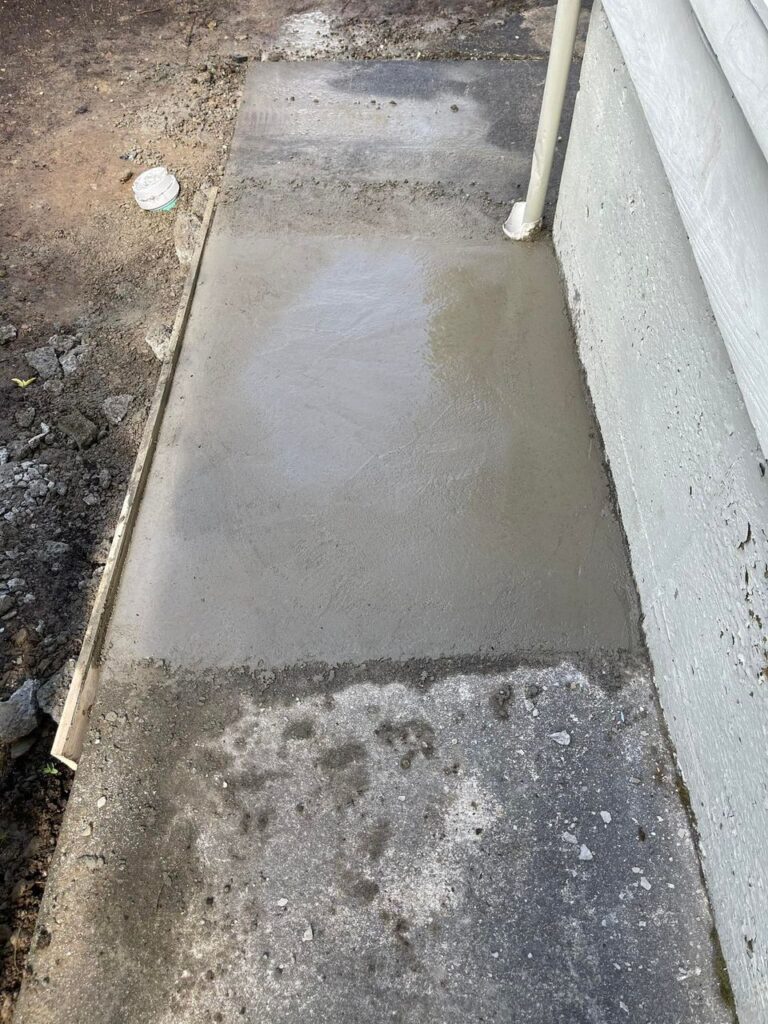
Keep it at grade and keep it clear. If a garden bed has crept up over it, a riser extension brings the cap back up to the surface. And don’t pave over it. Somebody will have to break up that concrete the first time the line needs clearing, and it’s usually during a backup.
What’s Inside the Cap
You don’t need to open the cleanout to know where it is, and most of the time you shouldn’t. But if a drain is backing up and you want to understand what’s going on, the cap can tell you a lot.
Loosen it slowly and stand off to one side. If the line is backed up past the cleanout, sewage may be sitting in the riser under some pressure, and it’ll come out the moment the threads let go. Have old towels ready and keep your face clear of the opening.
Then look in. What you see answers the big question:
- Water or sewage standing in the cleanout means the blockage is further along, somewhere between the cleanout and the city main.
- A dry cleanout while drains inside are backing up means the blockage is between the house and the cleanout, usually under the house or right where the line exits the foundation.
Knowing which side of the cleanout the problem is on tells us which way to run the cable, and that alone can save a good chunk of time on the call.
When There Isn’t One
Plenty of older homes in South King County were built without an outside cleanout, and others lost theirs under a driveway or a patio somewhere along the way. It’s better to find that out now than during a backup, because it changes how the job gets done.
With no cleanout, access usually means pulling a toilet and running the cable in through the toilet flange. It works. But it means working through a three-inch opening in your bathroom floor, and whatever comes back out of the line comes out in your bathroom. Going in through the roof vent is possible as well. It’s also a good way to fall off a wet roof, so we don’t suggest it to homeowners.
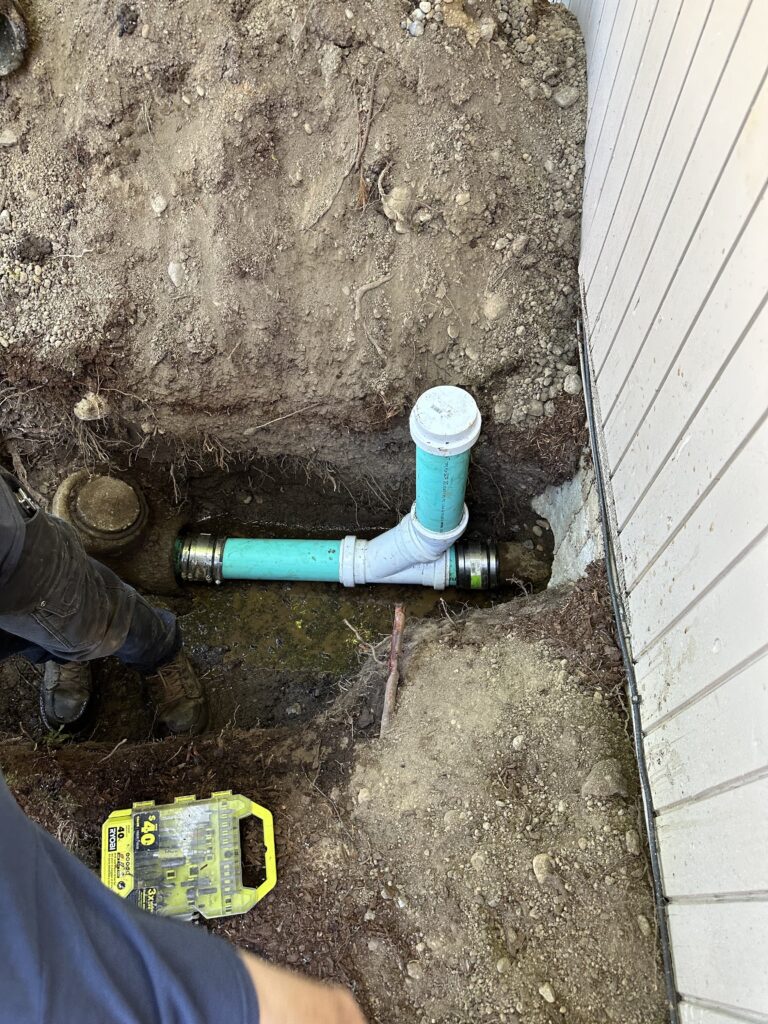
Adding a cleanout is a straightforward job when it’s planned. We dig down to the line near the foundation, cut in the fitting, and bring a riser up to the surface. If your line needs a camera inspection anyway, that’s the obvious time to do it, since the new cleanout gives the camera a clean way in. Most cities want a permit for this kind of sewer work, and the plumber doing it should be the one pulling it.
Why It Matters More on Older Lines
A lot of the side sewers in King County are clay, laid in short sections with joints that were never fully watertight. Seattle Public Utilities says as much in its homeowner guidance, and it recommends having older clay and concrete lines inspected every one to two years.
Those joints are where tree roots get in. Roots are the most common reason main lines back up in this part of the state, and once they’re in a line they keep coming back. If you have a clay lateral and a big maple out front, that line is going to need clearing again at some point. A cleanout you can get to in thirty seconds makes each of those visits shorter and cheaper.
The cleanout is also where the sewer camera goes in. If you’re buying an older house, or you’ve had two backups in a year, a camera inspection through the cleanout shows you exactly what you’re dealing with, whether that’s a root mass at a single joint or a section of pipe that’s starting to give way.
Don’t Run Water Into a Backed-Up Line
If a drain is backing up and the cleanout has standing water in it, stop using water in the house. That means the dishwasher and the washing machine too, and no flushing. Every gallon you add has nowhere to go, and it comes up through the lowest drain in the house first. That’s often a ground-floor shower or a floor drain in the garage.
If you ever find the cap missing or cracked, get it replaced. An open cleanout lets sewer gas out into the yard and lets rainwater and grit into the line. Rats find them too.
We find, clear and add cleanouts all over King and Pierce County. While we’re there, we can run a camera down the line so you know what shape it’s in before it becomes a problem.
Backing up right now? Call 206-579-1757. More on sewer cleaning and trenchless sewer repair.
Questions We Get About Sewer Cleanouts
Can I clear a sewer clog myself through the cleanout?
Sometimes. A rented drum auger will push through a soft blockage like paper or grease. The risk is roots. A cable can get wrapped up in a root mass or snagged on a broken section of pipe and stuck there, and then you need us anyway, plus a stuck cable to deal with. If the same line has backed up before, skip the rental and get it looked at.
Who is responsible for the sewer line between my house and the street?
In Seattle, the property owner is responsible for the side sewer all the way to the city main under the street, and the city’s code says so in Chapter 21.16. Most cities around here work the same way or close to it, but where your responsibility ends can vary. Your city’s public works department can tell you exactly where the line gets handed off.
How much does it cost to add a sewer cleanout?
It mostly depends on how deep the line is and what’s on top of it. A shallow line under lawn is a fairly modest job. One under a concrete walkway or a driveway is a bigger one. We quote it after a camera look, since the camera also tells us whether the line is in good enough shape to be worth putting a cleanout on.
Is it OK to cover my cleanout with landscaping or bark?
It’s fine to plant around it, but keep the cap visible and reachable. If a bed has built up over it, a riser extension brings the cap back up to the surface. A buried cleanout costs you time during a backup, and a paved-over one means breaking concrete to get to it.
Why does my cleanout have two caps?
That’s a two-way cleanout. One opening points back toward the house and the other points toward the street, so we can run a cable in whichever direction the blockage is. They’re common on side sewers that were replaced in the last couple of decades, and they make a main line call quicker.
Should I be worried if there’s water sitting in my cleanout?
If your drains are working normally, a little water in the bottom of the riser can be nothing. If drains in the house are slow or backing up and the cleanout is full, the blockage is between the cleanout and the city main. Stop running water in the house and call.